Gardening Services in Hounslow

Gardening Services Hounslow provides practical outdoor care for homes and small businesses that want their grounds kept neat, usable and well managed through the seasons. Our work can include routine maintenance, one-off tidy-ups, hedge trimming, mowing, planting support and broader garden clearance, with the right approach chosen to suit the space and the condition of the site.
We keep the service straightforward and structured, so you can decide whether you need regular upkeep or help with a specific task. If you are comparing options, it is sensible to think about access, the size of the garden, the amount of overgrowth and any features that need careful handling, such as borders, shrubs, mature trees or paved areas. Clear priorities help shape a more accurate quotation.
Use the page sections below to see how the main garden services fit together, then request a quotation when you are ready to talk through the work needed. We can then discuss the most suitable scope, the order of tasks and any practical constraints before work begins.
Garden maintenance and regular care
Routine garden maintenance is often the most effective way to keep an outdoor space in good order without letting tasks build up. This can include mowing, edging, weeding, light pruning, deadheading and general tidying, along with keeping paths, borders and access routes clear. A regular plan suits gardens that change quickly through the growing season and need consistent attention rather than occasional heavy work. It also helps maintain a cleaner finish around planting beds and lawn areas.
For many customers, the value of maintenance lies in consistency. Instead of waiting for grass, hedges or beds to become difficult to manage, the work can be spread across the year. That makes it easier to preserve the shape of the garden, reduce the time needed per visit and avoid the sharper contrast between well-kept areas and neglected corners. Where useful, the maintenance schedule can be adapted to seasonal growth patterns rather than forced into a fixed routine.
Lawn care, edging and visible finish
A tidy lawn can transform the overall look of a garden, especially when paired with clean edging and clear borders. Mowing height, frequency and finish all matter, as do the condition of the surface and the amount of shade or wear the grass receives. A neat lawn is not only about appearance; it can also make the rest of the garden easier to read, which helps when deciding what needs trimming, clearing or replanting. If you want a tidier outside area without overcomplicating the work, this is often the starting point.
Hedge trimming and shrub control
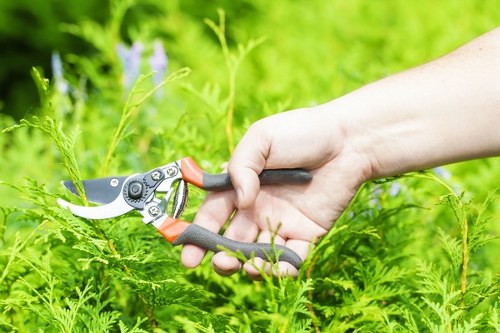
Hedge trimming needs a careful balance between shaping and restraint. Some hedges benefit from regular light trimming to keep them dense and even, while others are better cut less often to avoid exposing bare sections or creating stress in the plant. Our approach to hedge work is to keep the outline sensible, reduce unwanted spread and leave the growth in a condition that continues to suit the garden rather than forcing an overly severe cut.
Shrubs and mixed planting can require a different rhythm from hedges, because each plant has its own growth habit, flowering period and tolerance for pruning. A considered cut can help maintain structure, improve light and keep the planting area from becoming crowded. Where a border contains several species, the work is usually best planned around the needs of the whole area, so one plant is not trimmed in a way that harms another nearby. That is especially important where shape and flowering are both part of the garden’s character.
When trimming is more than a tidy-up
Sometimes trimming is needed not just for appearance but to restore access, define boundaries or prevent branches from interfering with paths, fences and neighbouring areas. In those situations, the work may involve more than a quick pass with tools, because the shape, height and spread all affect the result. The aim is to create a practical balance: clear enough to manage, but still appropriate to the plant type and the wider layout of the garden.
Garden clearance for overgrown spaces

Garden clearance is suited to spaces that have become congested, untidy or hard to use because of accumulated debris, invasive growth or long-unmanaged areas. It can involve cutting back vegetation, removing loose waste, reducing dense growth and opening up the site so the rest of the garden can be assessed properly. Where a garden has not been maintained for a while, clearance is often the first sensible stage before ongoing care or replanting can be planned.
Clearance work usually benefits from a methodical order. The most obstructive material is tackled first, then the remaining structure of the space is made clearer so that paths, beds and boundary edges can be seen again. That makes later decisions easier, whether the goal is to simplify the plot, prepare it for seasonal use or create a cleaner basis for other garden improvements. In some cases, clearance also reveals what can be retained rather than removed, which avoids unnecessary disruption to established features.
Typical clearance tasks may include:
- removing cuttings, loose debris and leftover organic waste
- reducing heavy overgrowth in beds, corners and along boundaries
- opening access to paths, sheds, fences and lawn edges
- separating material that should be kept from material that needs disposal
- creating a safer, more workable starting point for future maintenance
Landscaping and outdoor improvement
Landscaping covers work that changes the structure, usability or visual balance of a garden rather than simply maintaining what is already there. It may involve reshaping areas, improving borders, defining spaces for planting or circulation, and introducing materials or features that make the layout more practical. Some gardens only need modest adjustment, while others require a fuller reworking to make better use of the available area.
Good landscaping decisions are usually built around how the space is used. A garden designed for regular seating, planting and easy movement will need different priorities from one that is mostly decorative or one that needs simpler upkeep. That is why it helps to think about the relationship between hard surfaces, planting areas, access routes and the overall scale of the plot. Our landscaping work can be planned to support those aims without making the design overcomplicated.
Working with structure and planting together
When landscaping includes both hard and soft elements, each part should support the other. For example, a border that is too narrow may make planting awkward, while a path placed without enough clearance can interrupt the flow of the garden. Careful planning helps avoid those issues. It also makes it easier to decide what should stay, what should be reduced and where new features would genuinely add value rather than simply fill space. Where appropriate, the result is a garden that feels more ordered and easier to manage over time.
About Hounslow

Hounslow is a west London district whose identity has long been shaped by movement, trade and changing patterns of settlement. Historically linked to the old turnpike routes between London and the west, it later developed as a suburban centre with transport connections that encouraged growth and mixed land use. The district sits within the London Borough of Hounslow and includes a broad range of residential streets, commercial areas and civic spaces, reflecting its evolution from earlier village origins into a larger urban centre. Its name is also associated with Hounslow Heath, a landscape that once covered a far wider area and played a notable role in the locality’s older history.
Tree lopping and removal work
Tree lopping and removal need careful judgement because trees affect shade, structure, privacy and the look of the whole garden. The work can range from reducing nuisance growth to removing a tree that has become unsuitable for its position. In every case, the practical aim is to handle the tree safely and sensibly while considering the impact on the rest of the site. This is one of the reasons it helps to approach tree work as a planned task rather than a last-minute fix.
Some trees can be managed with selective pruning, while others may need more substantial reduction or complete removal if they are diseased, poorly placed or interfering with surrounding features. A careful assessment of the trunk, canopy and nearby structures helps determine the right level of intervention. Where a tree is close to fencing, paving or planted areas, the method should also take account of access and the protection of surrounding surfaces. Measured tree work usually gives a better result than an aggressive cut made without a clear plan.
Once major branches are dealt with, the remaining garden space often becomes easier to use and maintain. That can make it simpler to follow up with hedge trimming, border work or wider garden clearance, depending on what the site needs next. The purpose is not just to remove height or bulk, but to restore a garden that feels balanced and manageable.
Decking and usable outdoor areas

Decking can make a garden more usable by creating a defined surface for seating, walking or linking different parts of the outdoor space. It often works best when it suits the scale of the garden and sits naturally beside planting, paving or lawn areas. A well-considered deck does not need to dominate the site; instead, it should provide a clear function while fitting the rest of the layout. The choice of position, shape and finish all affect how practical the area feels.
Where decking is part of a wider garden project, it can be planned alongside other improvements so the finished space feels connected rather than pieced together. For example, the transition from lawn to deck, or from planting to timber surface, needs enough room to work visually and physically. Weathering, cleaning and general upkeep are also worth bearing in mind, because any outdoor surface benefits from being designed with realistic maintenance in mind. If you are weighing up options, a simple and durable layout often serves better than a complex one. Ask for a quotation when you are ready to compare the practical choices.
We can also combine decking with related services where suitable, so that the rest of the garden is not left unfinished after the main structure is installed or adjusted. A clear plan from the outset helps the project progress in a sensible order and avoids unnecessary rework. If you would like to talk through options, the next step is straightforward: request a quotation and outline the space you want to improve.
Planning, access and quotation details
Quotation work is usually smoother when the basic facts are clear from the beginning. The most useful details are the type of task, the approximate size of the area, how accessible the garden is and whether there are any features that need particular care. That might include tight side access, steep changes in level, delicate planting or heavier waste that needs careful handling. A short description of the work can help, but clear priorities matter more than polished wording.
It also helps to think about whether the job is a one-off clearance, a seasonal tidy-up or an ongoing maintenance arrangement. Those choices affect the order in which work is done and the tools or time needed. In many cases, a practical quotation depends on seeing how much of the garden is straightforward and how much requires attention around obstacles. If you can explain the outcome you want, it becomes easier to suggest a sensible scope without adding unnecessary extras.
When you are ready, send the key details and ask for a quotation. A brief, focused enquiry is usually enough to start the conversation and determine whether the work is best approached as maintenance, clearance, trimming or a combination of services.
Seasonal garden work and longer-term upkeep
Seasonal change affects nearly every garden, so the most useful plan is often one that adapts through the year rather than staying fixed. Spring may call for cutting back, tidying borders and preparing fresh growth, while summer often brings mowing, edging and more frequent trimming. In autumn, leaves, cuttings and softer growth can build up quickly, and winter can be the time for more structural attention if conditions allow. Each season therefore has its own balance of maintenance tasks.
Longer-term upkeep is about preventing the garden from moving into cycles of decline and heavy recovery work. When the space is looked after regularly, it is usually easier to preserve planting structure, keep access routes open and avoid large amounts of waste building up at once. That makes the garden more workable and can also reduce the effort needed whenever a deeper tidy-up is eventually required. A calm, steady approach tends to produce the most reliable results.
For customers who want the garden to remain usable throughout the year, a regular maintenance pattern can be more effective than occasional reactive work. If the space also needs hedge trimming, clearance or small landscaping adjustments, those tasks can often be grouped so the garden develops in a more coherent way rather than being treated as separate fixes.
Materials, waste and the practical finish
Good garden work does not end when the visible cutting or shaping is complete. The finishing stage matters because cuttings, branches, debris and loose material can change the feel of the space if they are left behind. A tidy finish also helps reveal whether any areas still need attention, especially where overgrowth had previously hidden borders, edges or surfaces. That final pass is often what turns a difficult-looking job into a manageable outdoor area again.
Depending on the service, the result may include cleared paths, neater edges, improved shape in hedges or shrubs, and a more defined separation between planting and open ground. These details are small individually, but together they make the garden easier to use and simpler to look after. Where waste has been generated, handling it sensibly is part of the same process, because the work should leave the site in a cleaner and more orderly condition than before.
If you are planning several tasks together, it is usually best to think about them in a sequence. Clearance may need to happen before trimming; trimming may be needed before shaping or planting adjustments; and broader landscaping may depend on first understanding what is already in place. Request a quotation if you would like the work assessed as a single, joined-up project.
Choosing the right level of service
Not every garden needs the same kind of intervention. Some spaces only need routine mowing and light trimming, while others require clearance, pruning and more structural work before they can be maintained properly. The right level of service depends on how the garden is used, how much growth has accumulated and whether the aim is to preserve the current layout or reshape it. A good quotation should reflect those differences instead of forcing every job into the same pattern.
It can help to think in terms of priorities. The first priority might be access, the second might be appearance, and the third might be establishing a maintenance pattern for later. That order allows the work to be planned sensibly and keeps the outcome realistic. If your garden has mixed needs, we can discuss which tasks are essential now and which could wait until the next stage. Simple, honest scope usually gives the clearest result.
From there, it becomes easier to combine the relevant services without overdoing the job. That may mean pairings such as maintenance and hedge trimming, clearance and pruning, or landscaping with a follow-up care plan. When you are ready, ask for a quotation and describe the main outcome you want the garden to achieve.